
Guide
Traffic Racer Open World Map Guide: Village, Highway and City
The whole map, region by region: what each part of the Traffic Racer Open World map teaches, where the good roads hide and how it all connects.
Itinerary Route ledger for this page
Most racing games give you a menu of tracks. This one gives you a country. The map in Traffic Racer Open World is a single connected network, and learning its shape is the real first upgrade. This guide walks the three regions the way our reviewer mapped them for the Traffic Racer Open World official site.
The village region
Narrow lanes, patched tarmac, farm traffic and the game's spiritual home. Speeds are low, lessons are gentle, and the local fleet of VAZ and UAZ metal feels perfectly placed. Every player should serve an apprenticeship here; the countryside teaches anticipation that the fast regions will examine.
The joins matter as much as the regions. Village lanes feed the highway at two natural junctions, and the highway pours into the city ring without a single loading screen, so a drive can change character three times in five minutes. Weather and time of day roll across the whole network together, which means a fog bank found in the countryside is waiting for you on the ring road too. Learn where the regions touch and Traffic Racer Open World stops feeling like three maps and starts feeling like one country with three accents.
The highway region
Multi-lane flow, heavy trucks and the long straights where near-miss chains build serious scores. The highway connects everything, so you will cross it constantly; learn its junctions and service turn-offs early and the whole map shrinks.
The city region
Panel-block districts, ring roads and rush-hour grids under changeable weather. The city is the densest, hardest and prettiest region, especially in rain at night. Arrive with a sorted car and sorted habits; it forgives neither cheap tyres nor lazy braking. Learn the three countries of Traffic Racer Open World and the whole game opens up.
Reading the map like a driver
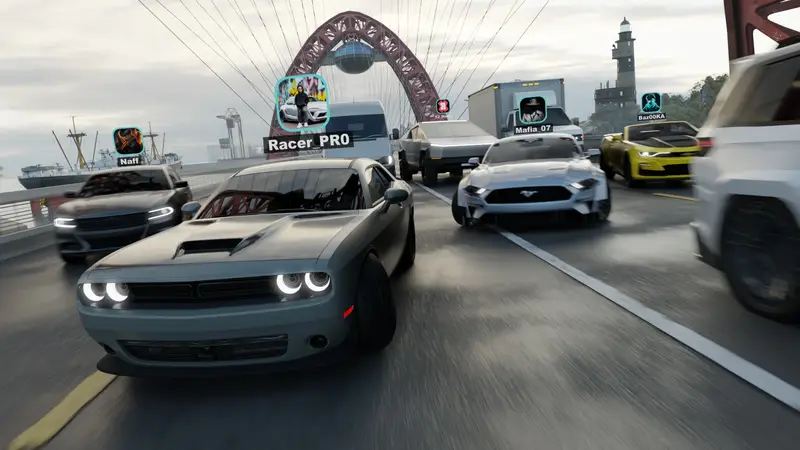
Forget memorising street names. Drivers who know this world navigate by anchors: the bridge on the highway run, the water tower over the village, the first lit interchange on the city ring. String three anchors together and any route plans itself. Our village guide to driving like a local walks the countryside lane by lane, including the shortcuts that never appear on the main road, and it is the right place to build those anchor habits at gentle speeds.
At the other end of the network, the city guide to the ring road and rush hour covers the dense districts where anchors come thick and fast and traffic punishes hesitation. Read the two guides alongside this map overview and Traffic Racer Open World becomes legible end to end: you will always know which region you are in, which one comes next, and which road joins them.
One last habit ties the chart together: end every session in a different region from where you started. The forced crossing keeps the joins fresh in your memory, exposes you to whatever weather is moving across the network, and turns navigation from a studied skill into reflex. Do that for a fortnight and Traffic Racer Open World needs no map screen at all, because the map is in your head.
Quick Answers
Is the map really one connected world?
Yes. Village, highway and city join by real roads with no loading screens between regions.
Which region should beginners start in?
The village. Its slow traffic teaches reading the road before speed enters the picture.
Does weather cover the whole map at once?
Yes. Rain, fog and time of day roll across all regions together, which makes route planning meaningful.